Shows & Fairs

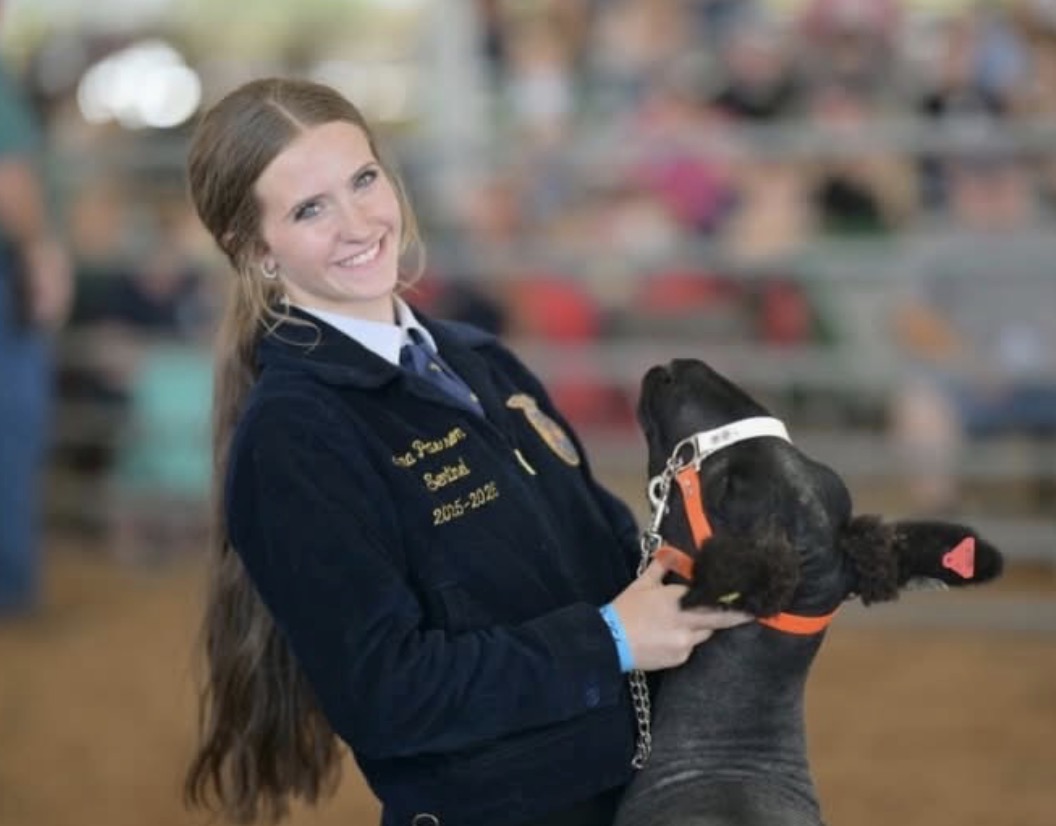
Raising and showing an animal.

This is the part of agricultural education people picture first, and it is the part families have the most questions about. Here is what it actually involves — the requirements, the real differences between project types, what each species asks of you, and the deadlines it runs on.

Time-sensitive: Central Florida Fair registration for market steer and market goat closes September 1, 2026. Market swine and lamb close October 2. If any of that interests you, fill out the form below now — not at the first meeting.

Every exhibitor is certified in ethics. Statewide, no exceptions.

Before any student steps into a show ring, they complete the Youth Livestock Show Ethics & Animal Care Workshop. This is not a chapter rule and it is not a Central Florida Fair rule — it is run by the Florida State Fair and required across Florida. Without a certification number, a student cannot exhibit.

The workshop covers the purpose of a youth livestock project, ethics in youth programs, proper handling and management, the difference between animal welfare and animal rights, and how to represent animal agriculture well.

Students register themselves and attend themselves. I will remind you and I will help you pick a date, but the registration is the exhibitor's responsibility, not mine and not your parent's.

Certification lasts three fair seasons, not three calendar years. For 2026–2027, numbers beginning 25, 26, or 27 are current. Already certified? Tell me your number on the form below instead of sitting through it again.

Your animal needs a health certificate.

Ethics certifies you. A health certificate certifies your animal, and shows require both. It is an official document from a licensed veterinarian — a Certificate of Veterinary Inspection — confirming the animal was examined and is free of disease before it travels to a show.

Every show sets its own requirements, and they differ by species and sometimes by year. Some also require specific tests or vaccinations on top of the inspection. Read the rules for the show you are entering, then book the vet with time to spare — certificates expire, so one issued too early is as useless as one not issued at all.

This costs money and it takes an appointment. Budget for it from the start rather than discovering it the week of the show, and talk to me early if finding a large-animal vet is the obstacle.

Two deadlines, and they are different.

Florida State Fair

Certified by January 18, 2027

Every exhibitor at the 2027 Florida State Fair must hold an ethics number by this date. January 18 is also the final workshop of the season for State Fair exhibitors.

Central Florida Fair

Certified by January 31, 2027

The last Orlando workshop is January 23 — eight days before the deadline. If you are showing at both fairs, the January 18 State Fair date governs.

Where and when.

Workshops run all over the state and you may attend any of them. Additional dates get added through the season, so check the registration site. Zoom classes are not offered.

📍

Orlando — October 14

Central Florida Fairgrounds, Main Exhibit Hall. Our home fairgrounds and the easiest one to get to.

Time
4:00–7:00 PM, arrive 3:30–3:45
Pre-registration closes
October 11, 2026
Capacity
200 students
📍

Orlando — January 23

Central Florida Fairgrounds, Main Exhibit Hall. The last Orlando session of the season.

Time
9:00 AM–12:00 PM, arrive 8:30–8:45
Pre-registration closes
January 21, 2027
Capacity
200 students
🚗

Lutz — October 17

Martinez Middle School cafeteria. About ninety minutes away.

Time
10:00 AM–1:00 PM
Capacity
100 students
🚗

Palmetto — October 31

Manatee County Fairgrounds, Veterans Hall.

Time
9:00 AM–12:00 PM, arrive 8:30–8:45
Pre-registration closes
October 28, 2026
Capacity
200 students
🚗

West Palm Beach — November 1

South Florida Fairgrounds. Doors close at 9:00 AM sharp.

Time
9:00 AM–12:00 PM, arrive 8:30–8:45
Pre-registration closes
October 28, 2026
Capacity
120 students
🚗

Tallahassee — September 19

North Florida Fairgrounds. Pre-registration required — no on-site or late registration.

Time
1:00–4:00 PM
Pre-registration closes
September 16, 2026
Capacity
75 students

Read these rules before you go. People lose their certification over them.

Arrive early. Anyone more than ten minutes late is not permitted to sign in and does not receive a number. No appeal.

Sign in and sign out, with times. Miss either signature and you are ineligible, even if you sat through the whole class.

Stay to the end. Leaving early means no sign-out, which means no number.

Register one exhibitor at a time, and only for one workshop — registering for several holds seats other students need. Do not register adults.

Save the email. Your certification number arrives within three to five business days and it will not be resent. Screenshot it, forward it to a parent, and send it to me.

Ages 8–18 as of September 1. Parents are encouraged to stay — trainers teach, they do not supervise.

Register at FloridaStateFairAg.com — that is the official registration site for every workshop in the state, wherever it is held. Questions about the ethics program go to Emily Smith at Ethics@FloridaStateFair.com. To cancel a registration, email that same address.

Florida State Fair

A separate fair, on a separate clock.

Tampa, February 4–15, 2027. The State Fair is not part of the Central Florida Fair and shares none of its deadlines, entries, or paperwork. Students may show at both, but that means running two sets of requirements side by side — which is entirely doable if you plan it in August rather than discovering it in December.

What's different

Its own everything.

  • Separate entry process with its own fall deadlines.
  • Ethics certified by January 18 — earlier than the Central Florida Fair's January 31.
  • Larger classes and deeper competition. This is the state-level show.
  • Achievement points and premiums operate on the State Fair's own system.

Where to look

Official sources.

Entries, rules, premium books, and ethics registration all live on the fair's own sites.

FloridaStateFairAg.com →
Agriculture programs →
Competitions & shows →

Thinking about both fairs? Tell me on the form below and we will map the two calendars together before anything is entered. The overlap is manageable; the surprise is not.

Choose Your Project

Market or breeding — the difference matters.

This is the single decision that confuses new families most, and it shapes the cost, the timeline, and what happens at the end. Read both before deciding.

Market Project

Raised, shown, and sold.

You purchase a young animal, feed and care for it to a target weight over several months, and show it against other market animals. At the end of the fair, market animals are sold at auction and enter the food supply.

  • Judged on: muscling, finish, structure, and how well the animal will perform as a meat product.
  • Ends with: the auction. The animal does not come home. Students should understand this clearly before starting.
  • Timeline: one season, start to finish.
  • Money: higher up-front cost for the animal and feed, with auction proceeds returning at the end. Many students fund the next year's project from it.
  • Best for: a student who wants the full production cycle and a real financial record for their SAE.

Breeding Project

Kept, shown, and built on.

You purchase or lease a breeding-quality female, show her on her structure and genetic merit, and take her home afterward. She can be shown again in future years and can become the foundation of a small herd or flock.

  • Judged on: conformation, soundness, and breeding potential — how good a mother she will be.
  • Ends with: going home with you. No auction.
  • Timeline: multi-year. The same animal can show across several seasons.
  • Money: no auction check, but the animal retains value and can produce offspring. A longer-horizon investment.
  • Best for: a student who wants to build something that lasts past one fair, and who has year-round housing.
Not sure yet? Good. That is the honest answer for most first-year families, and it is exactly what the conversation before sign-up is for. Check "not sure" on the form and we'll work through it together.

Species

What each project asks of you.
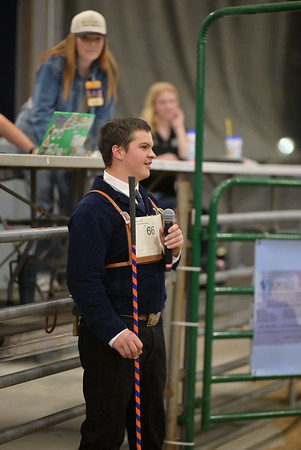
Space, daily time, and cost vary enormously across species. Costs shift year to year with feed and market prices, so the figures below are relative rather than exact — ask me for current numbers before committing to anything.

🐄

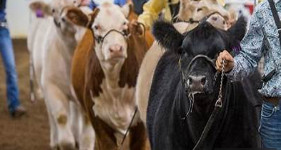
Market Steer

The largest commitment in every direction, and the most rewarding for a student who is genuinely ready for it.

Space
Barn or pen with shade, off school property
Daily time
Highest — feeding, working, and washing
Cost
Highest of any species
Starts
Earliest — often a year ahead
🐖

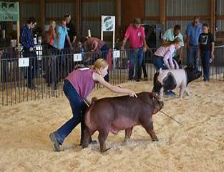
Market Swine

The most common first market project. Shorter feeding period and a manageable jump into the ring.

Space
Pen with shade and shelter
Daily time
Moderate
Cost
Moderate
Starts
Several months before the show
🐑

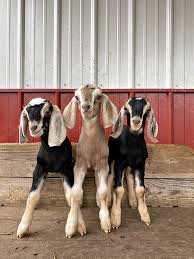
Lamb & Goat

Smaller animals a student can handle independently, with real showmanship demands. Strong first large-animal option.

Space
Small pen with shelter
Daily time
Moderate — includes exercise
Cost
Moderate
Starts
Several months before the show
🐓

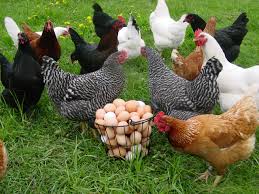
Poultry

The most accessible entry point. Low cost, short timeline, and a genuine competitive project — not a consolation prize.

Space
Small coop or hutch
Daily time
Low
Cost
Lowest
Starts
Weeks, not months
🐇

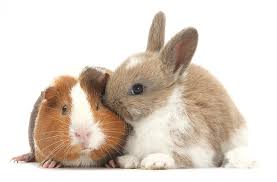
Rabbit & Cavy

Small, quiet, and suburban-friendly. Excellent for a student without land who still wants an animal project.

Space
Hutch — workable at most homes
Daily time
Low
Cost
Low
Starts
Weeks, not months
🐴

Horse

Generally for students who already own or lease a horse. If that's you, there is a place for you at the fair.

Space
Existing boarding or property
Daily time
High
Cost
Varies widely
Starts
Talk to me early
No land? You still have options. Poultry, rabbits, and cavies work at an ordinary house, and for the larger species we can often help find housing. Do not rule yourself out before asking — say so on the form and we will look at it together.

Deadlines

Registration closes in the fall. Some of it before school starts.

These are the actual Central Florida Fair dates for 2026–2027. They are set by the fair and they do not move. The single most common way a family loses a year is assuming this gets decided in the winter.

If you want a market steer or market goat, you have until September 1.

Registration for both opened August 1, 2026 — before school started — and closes September 1, 2026, three weeks into the school year. Steer weigh-in and ownership date follow on September 12.

If either is on your mind, contact me now rather than waiting for a meeting.

🐄

Market Steer

Registration opens
August 1, 2026
Registration closes
September 1, 2026
Weigh-in & ownership
September 12, 2026
🐐

Market Goat

Registration opens
August 1, 2026
Registration closes
September 1, 2026
Tag-in & ownership
December 9, 2026
🐖

Market Swine

Registration opens
September 1, 2026
Registration closes
October 2, 2026
Tag-in & ownership
December 12, 2026
🐑

Market Lamb

Registration opens
September 1, 2026
Registration closes
October 2, 2026
Tag-in & ownership
December 9, 2026
🐓

Commercial Laying Hens

Registration opens
August 1, 2026
Registration closes
August 14, 2026
Drawing & pick-up
August 15 & September 12
🐇

Breeding & Small Stock

Prospect steer, purebred poultry, meat doe, breeding ewe, rabbit, cavy, breeding beef.

Registration opens
November 16, 2026
Registration closes
January 15, 2027

The rest of the year.

  1. October 14 — Ethics workshop in Orlando, 4:00 PM

    Pre-registration closes October 11. Other statewide dates are listed above.

  2. December 9 & 12 — Tag-in

    Lamb and goat on the 9th, 6–7 PM. Swine on the 12th, 8–11 AM. Ownership dates lock here.

  3. January 15 — Breeding and small stock registration closes

    Also the deadline for rabbit and cavy lease submissions and Fair Buddies.

  4. January 23 — Last Orlando ethics workshop, 9:00 AM

    Pre-registration closes January 21. Central Florida Fair certification deadline is January 31; Florida State Fair is January 18.

  5. January 31 — February 3 — Scholarships and paperwork

    CFF and four memorial scholarships close. Report cards, IEP, and academic exception forms due February 3.

  6. February 8 — Record books due

    All record books to the Fair Office. This is not negotiable and it is not late-accepted.

  7. February 27 — Skill-A-Thon

    9 AM to noon, with rabbit, cavy, and poultry cage set-up in the afternoon.

  8. March 2–14 — The fair

    Check-ins, showmanship, shows, and the market auction on March 14 at 2 PM.

  9. April 2 — Thank-you letters due

    Buyer and add-on letters. Every day late costs $20 off the sale check, and a student who never sends one is suspended from showing for a year.

These are Central Florida Fair dates only. The Florida State Fair runs its own separate schedule — see the section above.

Central Florida Fair livestock →  ·  Florida State Fair youth agriculture →

The Show Circuit

Two kinds of competition, and the difference matters.

Not every event a Winter Park student competes in counts the same way, and knowing which is which shapes how you spend a season.

FFA Sanctioned

These earn FFA points.

Events on the official Florida FFA calendar — CDEs, LDEs, conferences, and state events. Results feed degrees, awards, and chapter recognition. On our calendar these appear in dark gold.

The 2026–2027 official FFA calendar publishes shortly; those dates go up as soon as it does.

Show Circuit

These don't — and they still matter.

The fairs and jackpot shows: Central Florida Fair, Florida State Fair, Rock Your Stock, Swine Down in O-Town, and the independent judging contests. No FFA points, real premiums and real experience. On our calendar these appear in green.

We compete in all of them.

Jackpot shows.

A jackpot show is a standalone competition outside the fair system — you enter, you show, you compete for cash and awards, and you go home. No auction, no ownership deadline, no season-long commitment. For a first-year exhibitor they are the single most useful thing you can do between buying an animal and walking into the fair.

Many of these are a single day or one weekend.

Jackpots come in every size. Some run three days across several species; plenty — the Barnyard Bash among them — are a one-day or one-weekend event you drive to in the morning and are home from by evening.

That makes them the lowest-barrier way into showing there is. You do not have to commit to a full market season to enter one. A student who wants to find out whether any of this is for them can do a single-day jackpot first and decide afterward — which, for a chapter where almost nobody has shown before, is exactly the right order to do it in.

October 30–31, 2026

Swine Down in O-Town

A two-day swine jackpot at the Central Florida Fairgrounds, early in the season — well before December tag-in. Good timing for a first-year hog exhibitor to find out what a ring actually feels like.

January 8–10, 2027

Rock Your Stock

Three days at the Central Florida Fairgrounds, roughly eight weeks before the fair — close enough that what you learn is still fresh.

  • Friday, January 8 — Livestock Judging & Goats
  • Saturday, January 9 — Sheep
  • Sunday, January 10 — Cattle

Event details & entry →

Why a first-year exhibitor should do one.

Everything that goes wrong in a show ring goes wrong the first time: the animal won't set up, you lose the judge, you don't know where to stand, you brace at the wrong moment. Finding that out at a jackpot in January costs you an entry fee. Finding it out in March costs you the year you spent feeding.

Jackpots are also where you meet the other exhibitors. For a chapter with no upperclassmen to learn from, that matters more here than it would anywhere else.

Friday's livestock judging is its own contest — separate from the FFA Livestock Evaluation CDE, and it does not carry FFA points. It is still excellent practice on the same skill set, so students on the judging team should be there whether or not they own an animal.

More single-day and weekend jackpots run across Central Florida through the season than are listed here, and new ones get announced with only a few weeks' notice. Tell me you're interested and I'll pass them along. Entry fees, class lists, and closing dates are set by each show — and remember these are optional events you enter and travel to on your own.

Registration & Forms

Where the paperwork actually lives.

Registration happens on the Central Florida Fair's own site, not through the school. Everything below comes from the fair — we help you complete it, but the deadlines and the forms are theirs. Start at the page matching your project type.

Market Projects

Youth Market Exhibitors

Steer, swine, lamb, goat, and commercial laying hens. Register, sign up for ethics, and download the forms here.

  • Market Animal Entry Form
  • Ethics class sign-up
  • CFF Bill of Sale
  • Orange County Born Affidavit
  • Chute / Stand Request Form
  • AIN Submission Form
  • 2.0 Academic Exception Form

Go to market exhibitor registration →

Breeding & Small Stock

Youth Breeding Exhibitors

Breeding beef, breeding sheep and goats, purebred poultry, rabbits, and cavies.

  • Breeding exhibitor registration
  • Ethics class sign-up
  • Rabbit / Cavy Lease form
  • Poultry Breed & Variety List
  • Chute / Stand Request Form
  • Report card, homeschool, IEP, and 2.0 submissions
  • Fair Buddies registration

Go to breeding exhibitor registration →

Join the GroupMe for your species. Actually do this.

The fair runs its exhibitor communication through GroupMe — separate groups for market steer, market swine, market lamb and goat, poultry, beef breeding, rabbit and cavy, and breeding sheep and goats. Schedule changes, weigh-in reminders, and last-minute corrections go out there first.

The join links are on the registration pages above. A family that skips this step is the family that finds out about a time change from somebody else's parent in the barn aisle.

Questions the fair has to answer, not us: Jacqueline Stough, Livestock & Education Manager — Jacki@centralfloridafair.com or (407) 735-4914. Central Florida Fairgrounds, 4603 W Colonial Dr, Orlando.

Anything about our chapter — whether a project is right for you, cost, housing, transport — comes to me first.

Sign Up

Tell me you're interested.

This is not a commitment and nothing is purchased off this form. It tells me who to sit down with, what housing we need to solve, and who still needs ethics certification. Answer honestly — "I don't know" is useful information here.

4-H, a middle school program, another county, a breed association — anything counts.
Required before you can show. If you already have it, we'll confirm it's current instead of repeating it.
Answering no does not disqualify you. It tells me what we need to solve, and it is frequently solvable.
Check as many as you like. Nothing here is binding.
Your animal will need a health certificate from a licensed vet before it can travel to a show. Not having one yet is fine — it just means we start looking earlier.
Cost concerns, transportation, scheduling, an animal you already own — anything.
Cost should never be the reason you don't ask. There are fundraising options, project sponsorships, and species at every price point. Fill this out and email me — that conversation stays between us.